Crawl Space Inspections in Turtle Creek, Boiling Springs SC
We’ve been under homes inside Turtle Creek recently — and the crawl spaces we inspected were in very good condition. That’s the honest report, and it’s the whole point of an inspection: measure first, then talk about work only if the readings call for it.
Not a marketing claim — a report from crawl space inspections we’ve performed inside Turtle Creek.
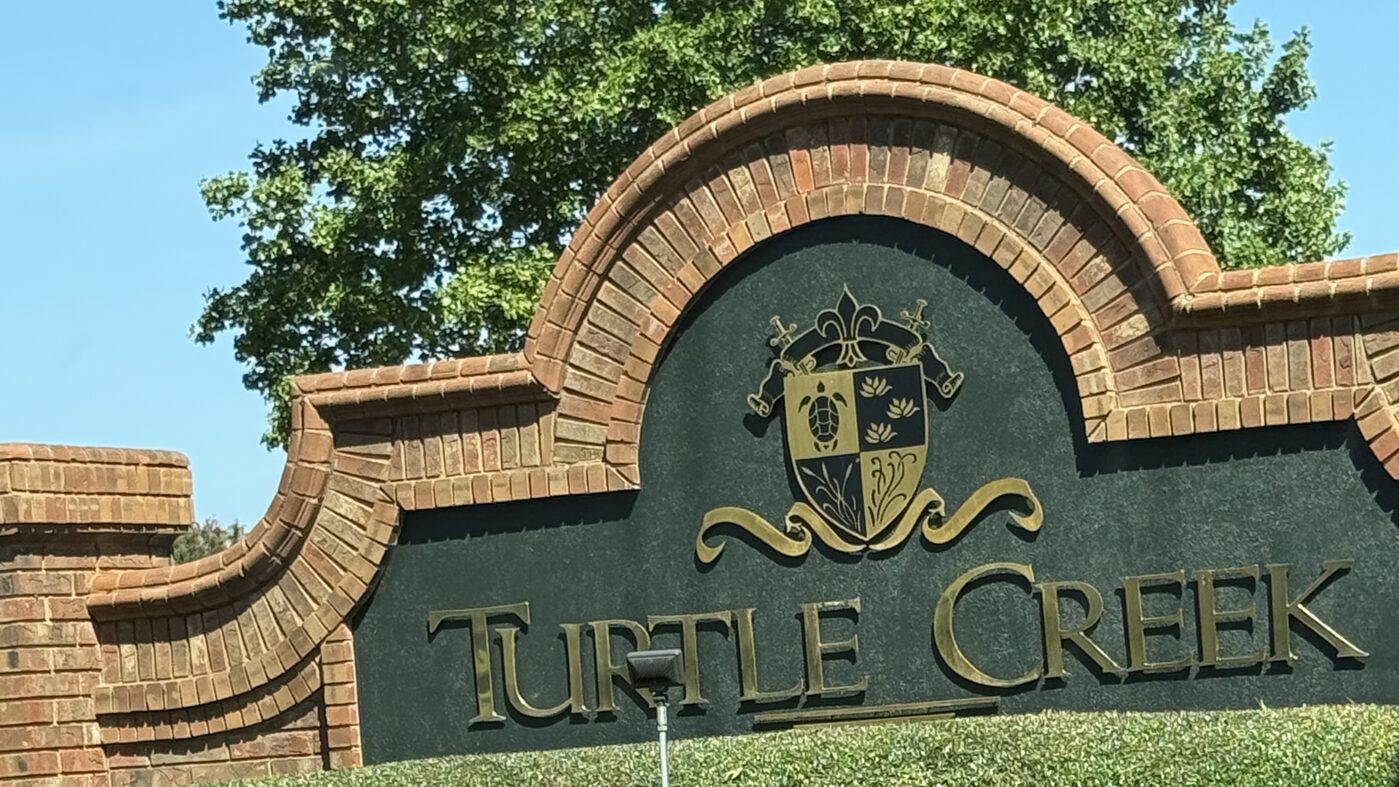
The Turtle Creek entrance in Boiling Springs, SC — photographed by our crew on the way in to a recent crawl space inspection in the neighborhood.
Turtle Creek inspection findings
Wood moisture: joists, girders and subfloor read in the safe, dry range — well under the level where rot and fungal growth get started.
Humidity: holding at a healthy level for the season rather than the sticky, condensing air we find under a lot of Upstate homes.
Vapor barrier: in place, covering the soil, and intact — no shredded or bunched-up plastic leaving dirt wide open.
No standing water and no wet soil, including in the low spots where water shows up first.
No active fungal growth on the framing or subfloor, and no musty odor pushing up into the house.
Our recommendation: keep an eye on it, check it again in a year. No encapsulation quote, because nothing justified one.
Turtle Creek is one of the established neighborhoods in Boiling Springs — brick-and-landscape entrance, mature trees, well-kept lots, and the kind of homes people stay in. Like most of northern Spartanburg County, the houses here sit over crawl space foundations, which means there’s a few hundred square feet under your floor doing quiet work every day: keeping ground moisture out of your framing and keeping the air below your bedrooms dry.
When we inspected inside Turtle Creek, that’s exactly what those crawl spaces were doing. Readings were good. Barriers were doing their job. Nothing was wet, nothing was growing, and nothing needed to be sold. We wrote it up, showed the homeowners the photos and the numbers, and left. That’s a normal outcome for us in well-built, well-maintained neighborhoods, and it’s worth saying out loud because so much crawl space marketing assumes the answer before anyone looks.
What we won’t tell you is that every crawl space in Turtle Creek is fine. Two houses on the same street can read very differently depending on how the lot drains, where the downspouts empty, whether an irrigation head is spraying a foundation vent, and whether anyone has been under there since the house was built. The only way to know which one yours is, is to measure it — which is what a free crawl space inspection is for.
The Actual Checklist
What We Check in a Turtle Creek Crawl Space
We don’t peek in from the access door. We go the full length of the crawl space and document these nine things — every home, every time.
1. Wood Moisture Content
Meter readings taken directly on floor joists, girders, band boards and subfloor in several locations. Wood that stays wet is what eventually cups floors, softens framing and invites rot — and it shows up on a meter long before you feel it upstairs.
2. Relative Humidity & Temperature
We log the air in the crawl space, not just the dirt. Humidity is the number that tells us whether the space is drying out between rains or slowly loading up moisture that will end up in your wood, insulation and indoor air.
3. Vapor Barrier Condition
Coverage, thickness, seams, and how well it’s held to the soil and piers. Thin builder plastic that has torn, bunched or been pulled back by other trades stops doing anything at all — and that’s a very different finding than “no barrier.” See vapor barrier installation.
4. Plumbing & Condensate Leaks
Supply lines, drain lines, water heater connections, HVAC condensate drains and sweating ductwork. A slow drip under a bathroom is one of the most common reasons a crawl space that used to be dry suddenly isn’t.
5. Insulation
Is it still up, still dry, still doing anything? Sagging batts, insulation stained or falling out of the joist bays, and paper facing installed the wrong direction all tell us something about the moisture history of the space.
6. Fungal Growth
We look on the subfloor, the joists and the band board for active surface growth, staining and the powdery or fuzzy patches homeowners usually call mold. We report what we see honestly — including when what you were told was mold is old, inactive staining.
7. Standing Water & Damp Soil
Puddles, saturated ground, silt lines and water staining on piers all tell us water has been in there, even on a dry day. Where it enters matters as much as how much — that’s what determines whether the fix is drainage or something simpler.
8. Drainage & Grading Concerns
Outside as well as under. Gutters and downspouts dumping at the foundation, grade that slopes back toward the house, missing splash blocks, and irrigation spraying the vents are cheap problems that cause expensive crawl spaces. See crawl space drainage solutions.
9. Ventilation
How many vents, whether they’re open, blocked, screened or broken, and whether the way the space is currently ventilated is helping or hurting given the readings we just took. Vents aren’t automatically good or bad — it depends on the numbers.
An Inspection Is Not an Encapsulation Recommendation
These are two separate things, and plenty of companies blur them on purpose.
“If your Turtle Creek crawl space is already doing its job, we’ll tell you.”
— and that’s exactly what happened on our recent inspections in the neighborhood.
An inspection produces information: readings, photos, and a description of conditions. Whether any work follows is a separate question that the information has to answer. When we walk out of a Turtle Creek crawl space with good numbers, the recommendation is “nothing right now” — not a discounted package, not a limited-time offer.
We wrote a whole page about this because it matters: not every crawl space needs encapsulation. Encapsulation is a real solution to a real problem, and it’s the right call in a lot of Boiling Springs homes. It is not the right call in a dry, sealed, well-drained crawl space that’s reading fine, and quoting it anyway would just be selling plastic.
Sometimes the honest answer is even smaller than a repair — extend a downspout, adjust a sprinkler head, re-seat a section of barrier that got pulled up, fix a dripping shutoff valve. We’ll say that, we’ll show you the photo of it, and we’ll tell you what to watch for so you know if it changes.
Findings → Recommendations
When We Do Recommend Work in Boiling Springs
Every recommendation has to be earned by a condition we found and can show you. Here’s the logic we use.
What we find
What we recommend
Barrier torn, thin, displaced, or large areas of soil exposed
Vapor barrier replacement — a properly sized liner sealed at the seams and piers so the soil stops feeding moisture into the space.
Humidity stays high after moisture sources are corrected; wood moisture trending up
Dehumidification — a right-sized crawl space dehumidifier on a humidistat to hold the space in a safe range year-round.
Chronic high humidity, condensation, odor and moisture that keep coming back despite repairs
Crawl space encapsulation — the full system, sealed and conditioned, when the space cannot be kept dry any other way.
Standing water, saturated soil, water entry at the footing or a lot that drains toward the house
Drainage correction first — grading, gutters, downspout extensions, interior drainage or a sump where the water volume calls for it. Sealing over a water problem never works.
Rotted or damaged framing, failed insulation, damaged ductwork, broken vents or access door
Targeted crawl space repair — fix what’s actually damaged, in the right order, before anything gets sealed up over it.
Dry soil, intact barrier, healthy readings, no growth, no water — like the Turtle Creek homes we inspected
Nothing. We give you the readings and photos for your records, tell you what to watch for, and suggest another look in about a year.
Local Conditions
What Affects Crawl Spaces in Turtle Creek & Boiling Springs
Neighborhood-level details that change what we find under one house versus the one next door.
Upstate rain and humid summers
Northern Spartanburg County gets heavy summer rain and long humid stretches. Warm, wet outdoor air moving through open foundation vents is the single biggest moisture load on a Boiling Springs crawl space.
Landscaped lots and irrigation
Turtle Creek is a neighborhood with real landscaping — beds, hedges and irrigation. Beds built up against the foundation and sprinkler heads aimed at a vent or a crawl space door put water exactly where you don’t want it.
Gutters, downspouts and grade
Most of the wet crawl spaces we find in Boiling Springs are fed from outside. A clogged gutter or a downspout dumping two feet from the wall can undo an otherwise perfect crawl space.
Clay-heavy soil
Upstate clay holds water and drains slowly, so soil under a home can stay damp days after a storm. It also means small grading problems have outsized effects on how long water sits near the footing.
Mature trees
Shade keeps foundation walls and soil cooler, which slows drying and raises condensation risk on the coolest surfaces — and leaves fill the gutters that are supposed to be carrying water away.
What’s been done under there before
Plumbers, HVAC techs and pest crews all work in crawl spaces. Barriers get pulled back, vents get left open, insulation gets knocked loose. A crawl space that was fine at closing may not be fine now.
Live Reviews
See Why Our Customers Love Us
★★★★★ 5.0 on Google
Honest work, clear communication, and results homeowners actually notice.
Straight answers about crawl space inspection, repair and moisture control in Turtle Creek and the rest of Boiling Springs, SC.
Has JHS actually inspected crawl spaces in Turtle Creek?
Yes. We’ve recently performed crawl space inspections inside Turtle Creek in Boiling Springs, SC. The crawl spaces we looked at were in very good condition — wood moisture and humidity readings sat in a healthy range, the vapor barriers were intact and doing their job, and we found no standing water or active fungal growth. We told those homeowners exactly that, and no work was recommended.
What does a crawl space inspection in Turtle Creek include?
We crawl the full space instead of looking in from the access door. We take wood moisture content readings on joists, girders and subfloor, measure relative humidity and temperature, inspect the vapor barrier for tears, gaps and coverage, look for plumbing and HVAC condensate leaks, check insulation, look for fungal growth on framing, note standing water or damp soil, evaluate how grading, gutters, downspouts and irrigation move water around the foundation, and assess ventilation. You get the photos and the readings, explained in plain language. Here’s how our free inspection works.
Does an inspection in Turtle Creek automatically mean you’ll recommend encapsulation?
No. An inspection is a measurement, not a sales appointment. Encapsulation is one option among several, and it only makes sense when the conditions justify it — which is why we published Not Every Crawl Space Needs Encapsulation. If your Turtle Creek crawl space is already doing its job, we’ll tell you.
How much does a crawl space inspection cost in Boiling Springs, SC?
Nothing. Our crawl space inspection in Turtle Creek and throughout Boiling Springs is free with no obligation — no trip charge, no inspection fee, no requirement to buy anything. If we find nothing wrong, the visit still costs you nothing and you keep the documented readings for your home.
When would you recommend vapor barrier replacement or a dehumidifier in a Turtle Creek home?
We recommend vapor barrier replacement when the existing liner is torn, thin, badly displaced or leaving large areas of soil exposed. We recommend a crawl space dehumidifier when humidity stays high after the moisture sources are addressed, or when wood moisture readings are climbing toward the range where rot and mold start. Drainage work always comes first when water is entering, because no liner or dehumidifier fixes a water problem it’s sitting in.
How often should a Boiling Springs homeowner have the crawl space checked?
About once a year for most homes, plus a look after unusually heavy rain, after any plumbing repair, or any time you notice something upstairs — a musty smell, soft or bouncy floors, indoor humidity that won’t come down. Crawl spaces in good shape can drift as gutters clog, irrigation heads shift, or a barrier gets pulled up during other work under the house.
Do you charge to come out to Turtle Creek if the crawl space turns out to be fine?
No — and that has already happened here. We inspected, the crawl spaces were in very good shape, and there was nothing to sell. The inspection was still free. We’d rather be the crawl space company you call in five years when something does change than the one that talked you into work you didn’t need.
Turtle Creek sits in northern Spartanburg County, and we’re under homes across this side of the Upstate every week. Explore nearby areas, or see our full Upstate South Carolina crawl space services hub.
Crawl Space Encapsulation Across the Greenville Area
JHS Crawlspace Specialist seals and protects crawl spaces throughout Greenville County. Explore our local encapsulation and moisture-control work in these communities: